...
Select a Country
Search Results
KOKU” (5)

Sorry, we couldn't find the content you were looking for.
Want to try another word or term?

Logo

SUBSTANCE ADDICTION

Substance use disorder is classified under Disorders due to substance use in the International Classification of Diseases, 11th Revision (ICD-11), published by the World Health Organization. Substances that can cause addiction are chemical compounds that, once entering the body, produce changes in behavior, mental state, and physical health. These substances are referred to in medical literature as psychoactive substances.

What Health Problems Does Substance Addiction Cause ?

Substance-related disorders are divided into substance use disorders and substance-induced disorders. Substance-induced conditions include intoxication, withdrawal, and substance- or medication-induced mental disorders such as psychotic disorders, bipolar and related disorders, depressive disorders, anxiety disorders, obsessive-compulsive and related disorders, sleep disorders, sexual dysfunctions, delirium, and neurocognitive disorders.

Individuals with substance use disorders may experience various cognitive and behavioral problems. Changes in brain structure and function can lead to intense cravings, personality changes, unusual behaviors, and other behavioral alterations. Brain imaging studies show that substance use causes changes in areas of the brain involved in judgment, decision-making, learning, memory, and behavioral control. Additionally, infants born to dependent women may experience neonatal abstinence syndrome.

...

People with substance use disorders are also more likely to develop lung or heart disease, stroke, cancer, and various mental health problems. They may be at higher risk of infectious diseases such as HIV and Hepatitis C, as well as premature death.

The severity of physical and mental health problems related to substance use is influenced by factors such as the frequency of use, the amount consumed in a single session, risky behaviors associated with use or context, the method of administration, or a combination of these factors.

Psychoactive Substances and Substance Use Disorders

A psychoactive substance is a chemical compound that affects the central nervous system, altering brain functions and leading to changes in perception, senses, behavior, consciousness, and mood. Certain medications are also classified as psychoactive substances. Even a single use of these substances can result in various disorders related to substance use.

However, addictive substances should not be limited solely to psychoactive compounds. This classification also includes disorders arising from the harmful, non-medical use of substances that are not chemically psychoactive but carry a risk of addiction.

Substance use disorders encompass various conditions resulting from the single or repeated use of psychoactive substances, including certain medications. Additionally, disorders resulting from the harmful, non-medical use of non-psychoactive substances are also included in this category.

Substance use stimulates the brain’s reward pathways. The pleasurable and reinforcing effects of substance use disrupt dopamine regulation in the brain, and this disruption further reinforces repeated use. When substance use becomes repetitive, it can lead to addiction. At the same time, it can cause numerous harms that threaten both mental and physical health.

According to the World Health Organization (WHO), at least two symptoms of substance addiction must occur within the last year, causing significant distress and a decrease in functionality. The symptoms include:

  • Intense desire and need for obtaining and using the substance.
  • Tendency to increase the dosage used.
  • Intense sensitivity to the physical and psychological effects of the substance and seeking these effects.
  • Making the substance a significant element in the person's life.
  • Repeatedly impeding work, home or school responsibilities due to substance use.
  • Being under the influence of substances in potentially dangerous situations (e.g., while driving) repeatedly.
  • Legal issues related to substance use.
  • Substance use causing repeated and persistent problems in social life and close relationships but continuing despite these issues.
  • Continuing substance use despite knowing its negative physical or mental effects.
  • Developing tolerance to the substance, requiring increased amounts for the desired effect or experiencing decreased effects with the same amount.

Withdrawal symptoms (nausea, insomnia, vomiting, irritability, depression, restlessness, aggression, diarrhea, sweating, tremors, muscle aches, fever, etc).

Substance addiction affects various regions of the central nervous system, causing both physical and psychological damage. These effects include:

  • Rendering the mind and willpower non-functional, distancing individuals from normal life and behaviors.
  • Inducing nausea, vomiting, abdominal pain, constipation, diarrhea and stomach and intestinal spasms/bleeding.
  • Causing harm to all internal organs, leading to various diseases.
  • Resulting in poisoning and potential death.
  • Diminishing the individual's adaptability to the environment, causing the individual to rapidly isolate from family and surroundings, often accompanied by severe depression.

Some ways for the relatives of substance users include:

  • Speaking may not be helpful if the person is under the influence.
  • Avoiding talking until you feel ready.
  • Being open, sincere and convincing without giving advice.
  • Avoiding generalizations.
  • Not speaking based on fears.
  • Avoiding labeling the person as a "user"; approaching someone labeled as a user is challenging.
  • Recognizing your biases ("These people are hopeless") to reduce the likelihood of miscommunication.
  • Trying to understand the person's thoughts, experiences and fears by putting yourself in their shoes.
  • Persuading them with a sincere approach to seek professional help.

Some points to be careful about for the relatives of substance users include:

   "No, my child would never use."
   
• Self-blame and blaming the spouse

   "This child turned out this way because of you."
   "We couldn't be good parents."

• Feeling disappointment and helplessness  

   "Did I raise you for this?"
   "Everything is over; nothing can be the same again."

• Anger

   "I can't have a child like this!"

• Blaming and humiliating the child

   "I can't have a child like this!"

• Blaming and humiliating the child

   "You won't amount to anything."

• Making extreme decisions

   "Your school life is over."


For more detailed information on the topics covered in this section, you may refer to the following sources:

• American Psychiatric Association (2024). What is a Substance Use Disorder? [Link: https://www.psychiatry.org/patients-families/addiction-substance-use-disorders/what-is-a-substance-use-disorder
• 101 Questions on Addiction (2019). [Link: 101 Soruda Bağımlılık | Yeşilay (yesilay.org.tr)]
• World Health Organization (2025). ICD-11 for Mortality and Morbidity Statistics, Disorders due to substance use. [Link: https://icd.who.int/browse/2025-01/mms/en#590211325 ]

More Latest News

...

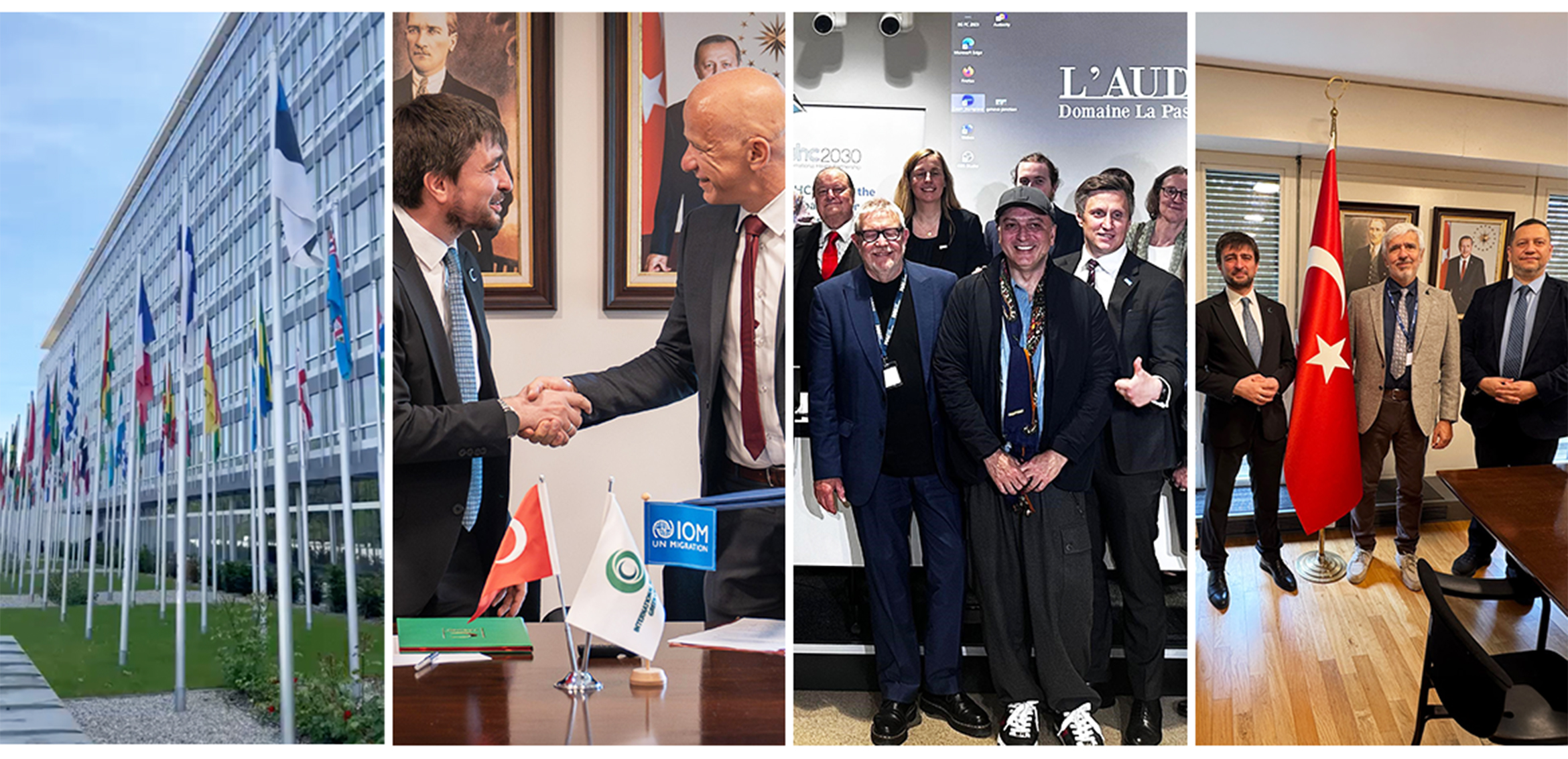
In an important step for global public health and humanitarian response, the International Federation of Green Crescent (IFGC) and the United Nations (UN) International Organization for Migration (IOM) have signed a comprehensive agreement. This Memorandum of Understanding (MoU) creates a official partnership to bring together addiction prevention work with mental health and psychosocial support (MHPSS) for migrants, refugees, and communities affected by crises. The official signing ceremony took place at the Permanent Mission of Türkiye to the United Nations Office in Geneva. The event was attended by Ambassador Dr. Mehmet Güllüoğlu, Vice President of the Turkish Green Crescent and Secretary-General of the IFGC, and Vincent Houver, IOM Director of the Department of Mobility Pathways and Inclusion, along with representatives from both institutions. This agreement does not mark the start of a brand-new relationship. Instead, it makes a long-standing partnership official and permanent. For years, Green Crescent Counseling Centers (YEDAM) have worked closely with the IOM on the ground, helping vulnerable communities fight addiction and mental health issues. This new MoU turns those local efforts into a structured, global alliance. STATEMENTS FROM LEADERS ON THE HUMANITARIAN NEEDS Speaking at the ceremony in Geneva, Ambassador Dr. Mehmet Güllüoğlu emphasized that this agreement is much more than just a routine official document, stating: "This ceremony reflects a joint commitment to support vulnerable and displaced communities through prevention, recovery, psychosocial well-being, and inclusive community-based approaches." Dr. Güllüoğlu drew attention to the current global situation, noting that millions of young people around the world are growing up under the shadow of wars, natural disasters, forced migration, and social instability. He explained that these crises do not just force people to leave their homes; they also break social bonds, weaken mental strength, increase isolation, and deeply hurt emotional well-being. Speaking about the expanding scope of addiction, Dr. Güllüoğlu said: "As IFGC, we believe it is becoming increasingly important that addiction prevention cannot be separated from broader discussions about well-being, resilience, inclusion, and human dignity. This includes not only substance addiction such as alcohol and drugs, but also behavioral addictions like gambling, gaming, and problematic technology use. These can become even more visible during periods of displacement, uncertainty, and social isolation." Representing the United Nations, IOM Director Vincent Houver acknowledged that public health—especially specialized fields like addiction treatment—is often underfunded and undervalued in global humanitarian response. Welcoming the partnership with the IFGC, Houver noted: "Unfortunately, drug and substance use, along with other addictive behaviors, crosscut very frequently with our work, but I think this is a reality of the humanitarian field. Drug use and substance addiction hinder the integration of migrants into host societies and present significant barriers that prevent them from successfully reintegrating and achieving social cohesion with the community when they return to their countries." Houver also highlighted that since humanitarian needs are growing globally while international budgets are shrinking, the wide network of the IFGC is incredibly valuable to the United Nations: "As humanitarian needs continue to increase globally, while resources tend to decrease, IOM is proud to partner with IFGC to strengthen prevention and access to care among migrants and host communities." Concluding his speech, Houver praised the leading role of Türkiye and the Green Crescent on the world stage: "Türkiye is an invaluable and strong partner for IOM, one of the key member states of IOM. Therefore, it is a matter of great pride for us that you represent Türkiye today, being here as civil and permanent representative. Türkiye is an absolutely indispensable partner for IOM in the field of migration and in the field of humanitarian assistance in general. Therefore, we are very proud to be able to partner with you today in this special setting." TECHNICAL SCOPE AND STRATEGIC PILLARS OF THE AGREEMENT The partnership focuses on four main strategic areas: sharing expertise by contributing to each other's international training programs on mental health, intercultural communication, and substance use disorders; launching joint research and pilot initiatives to study areas of shared interest; exploring new ways to share program information at the country level to improve field coordination and facilitate safe healthcare referrals; and exchanging specialized technical resources—such as clinical protocols, training tools, and guidance documents—on a case-by-case basis while fully respecting intellectual property rights and confidentiality frameworks.  To ensure safe field operations, the agreement introduces strict international legal and privacy guardrails. The framework explicitly prohibits any transfer or exchange of personal data belonging to beneficiaries or patients, requiring a separate, highly secure data-sharing agreement if such needs arise in the future. FUTURE OUTLOOK IFGC and the IOM will meet regularly to ensure the agreement is being put into practice. Following its immediate entry into force upon signature, both headquarters are asking that the details of this MoU be shared across all global field offices and regional teams.  

Read More

Contact Us

We would like to evaluate cooperation opportunities and communicate for joint projects.

Our Focus Points

To answer your questions in the fields of Addiction and Public Health...

All rights are reserved 2026 © International Federation of Green Cresent
Personal Data Protection Policy

Terms and Conditions

Copyright 2026 © International Federation of Green Cresent